Google+ Katie Bresner | UsedEverywhere

UsedEverywhere Blog

Posts from Katie Bresner

is a Social Media and Community Coordinator at UsedEverywhere.com. Twitter, Facebook, the Blog and the phone are her domains.
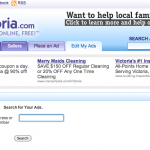
How To: Edit Your Ads

Did you forget to add some information to your ad that you already posted? Did you price your boat too high and you want to make some adjustments? Maybe your boat was priced just right and sold, but people still keep calling you about it and you need the phone to just stop ringing! All of these problems, whether you are selling a boat or something else, can be solved by editing your ad! You can add information, remove information, change the price, set your item to SOLD, and so much more. So today I am going to teach you how to do just that!

But remember, you can only edit an ad that you have already posted…

1. Go to your local UsedXYZ.com and click on the “Edit My Ads” Tab

Click on the "Edit My Ads" tab

2. Type in the email address or phone number that you used to post your ad originally.

Enter your Phone Number or Email Address

3. You should now be directed to your personal “Your Current Ads” Page. Find the ad you want to edit the information on, and then click Edit in New Window to start editing. Oh look, here is an ad for some outrageously priced bananas I posted, let’s edit it!

Click on "Edit in New Window"

4. Does this page look familiar? Take a look around, explore! It is curiously similar to the original page you used to Place an Ad. This is where you can edit the details of your ad to your heart’s content! Edit away!

Edit Your Ad Information

5. Done editing your ad information? Good job! Now scroll all the way down to the bottom of the page. Security check! I hope you remember the password you used when you first placed your ad. Enter your password, cross your fingers, and then click Update.

Enter Your Password and Update

6. Once you click Update, you will be taken straight to your ad page – this is what it looks like on the site. Make sure you can see your updated changes. And you’re done! Mazel Tov! You just edited your ad.

Double Check and You're Done

Valentine's Day "Oreo" Cookies

Why? Because gifts made by hand are more meaningful! At least that’s what people have been telling me. Now, let’s get one thing out in the open before we get too into this post – I was not hired at UsedEverywhere.com for my photography or baking skills. But by golly I tried my best!

So here we go. Valentine’s Day Homemade Oreo Cookies, a recipe I borrowed from mybakingaddiction.com.

Ingredients

For the cookies:
1 1/4 cups all-purpose flour
1/2 cup unsweetened Dutch process cocoa
1 teaspoon baking soda
1/4 teaspoon baking powder
1/4 teaspoon salt
1 to 1 1/2 cups sugar
1/2 cup plus 2 tablespoons (1 1/4 sticks) room-temperature, unsalted butter
1 large egg

For the filling:
1/4 cup (1/2 stick) room-temperature, unsalted butter
1/4 cup vegetable shortening
2 cups sifted confectioners’ sugar
2 teaspoons vanilla extract
Optional- Gel dye

Let’s bake!

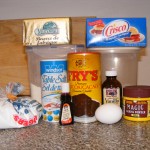
Step 1 Gather up your ingredients


Step 2
Preheat your oven to 375 Degrees. Line cookie sheets with parchment paper.


Step 3
 Mix the dry ingredients


Step 4
On low speed, add the butter, and then the egg. Continue mixing until dough comes together.


Step 5
Scoop teaspoons of the dough and roll it up and put ‘em on your parchment lined cookie sheet (about 2 inches apart). Flatten the dough a bit with moistened hands.


Step 6
Cook ‘em for 9 minutes (rotate half way through) and then take ‘em out and let ‘em cool.


Step 7
Make the filling, by putting butter & shortening in a mixing bowl & gradually beat in sugar and vanilla at a low speed. I added some red food colouring to make them more Valentiney. Turn the mixer on high and beat for 2 to 3 minutes until filling is light and fluffy


Step 8
Slap a teaspoon-sized dollop of filling in between two cookies and BAM! You’re done.


Happy Valentine’s Day!

Friday DIY: Fancy Magnet Board!

Behold! One fancy magnet board!

I stole today’s DIY from here: Curbly.com. I saw it and was reminded of my overwhelming desire to acquire a corkboard and organize all of the things scattered on my desk in such a way that they would be both off of my desk and vertical. “How to Make a Woodgrain Magnetic Memo Board” – done, yes, let’s do this, magnets, I’m into this. It functions exactly the same as a corkboard but with all of the glory of magnets – everything I have ever wanted.

Now, be warned, I did not follow Curbly’s instructions. I looked at the pictures briefly and then did what I thought made sense – and it worked wonderfully. Because it is just so easy! I even added an EXCITING TWIST to this project, but you have to read (or scroll) to the end to find out what it is!

What You Need:

  • Magnet Board (I got mine from Ikea, too)
  • Scissors
  • Contact Paper
  • Magnets*
  • Glue (preferably with/from a glue gun)*
  • Tzotchkes*

* For the TWIST

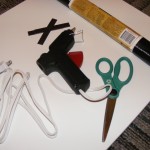
The Supplies

1. Place the magnet board onto the contact paper, facing down. This is so you can measure out how much contact paper you will need to cover the board.

Place Magnet Board onto Contact Paper

2. Cut the Contact Paper. Cut off the excess contact paper but make sure you leave enough room to wrap the paper around the sides of the board… much like wrapping a present.

Behold the Majesty of the Scissor

3. Peel off the back of the contact paper and place it on the magnet board. You will need a keen eye and an aggressive stance against air bubbles for this one. Take your time, there’s no rush. Slowly smooth the contact paper onto the magnet board (which, by the way, you should clean beforehand), and press out any lumps and bumps. You will notice I did not purchase “Woodgrain” contact paper. I choose “Faux Leather” because I am incredibly stylish.

Steady, Slow, Smooth.

4. Fold the edges around the back of the board. Like wrapping a present, you need to smooth the paper around the corners and continue around the back. It is helpful to give the corners a little snip so it folds and sticks better, like so:

Cut the Corners

5. Cut, Fold, Stick. Cut, fold, stick.

Cut, Fold, Stick

Beautiful Corners.

Tah Dah!

I hope you are ready for the twist: Make Your Own Magnets!

1. Gather up your Tzotchkes and Magnet Pieces. You will notice I have a selection of delectably-crafty items that apparently originated from various locations in Latin America. They sit on my desk as colourful clutter, but because I am in love with the people who gave them to me they have sentimental value to the max and must be honored accordingly. So I’m going to turn them into magnets to adorn my fancy new faux leather magnet board!

Llama and his Amigo are going to get Magnetic

I bought magnet strips to stick to these little guys – I was going to cut up the magnet I got from the dentist but it was busy holding up the collage of pictures and notes on my fridge.

2. Glue Magnet Pieces to Your Llama. It is helpful to first cut your magnet strips (or old magnets) to fit the back of whatever item you are turning into a magnet. Now, I got the magnet strips that are supposed to be sticky on one side – mine were not sticky on one side despite the package’s (empty) promises. Regardless, it is probably better to glue them with a glue gun anyway, since the bond is much stronger and satisfaction is guaranteed. Glue glue glue and then quickly stick as the glue dries quicktime.

Glue the back of the magnet (not the magnetic side) with the glue gun

Place the magnet on the back of the tzotchke. Do it fast! And make sure you put the glue on the non-magnetic side of the magnet.

I made another magnet by lining up these Guatemalan Worry Dolls that someone got me in Mexico. Global Village High Five! Come hang out on my new faux leather magnet board little guys!

3. Throw those magnets up on your fancy new magnet board and stand back to marvel at your creative genius.

(Editor’s note: this super nifty post was originally published March 3rd, 2011. Reduce, reuse, recycle – as we always say!)


Back to School Expenses Don’t Have to be So Expensive

Creative Commons Image | tncountryfan

My favourite part about school is back-to-school shopping. It is literally one of my favourite things to do. I happily go out and peruse the aisles of the office supply store, admiring all the different things I could use to organize all the different school supplies filling up my basket. Supplies for my supplies! The only part I don’t like about back-to-school shopping is the part where I get to the cash register and start to question whether I actually need everything I’ve picked up. Sacrifices must be made for school supplies are expensive. Add to the back-to-school clothes and all the other stuff you need, and the couple of weeks before school starts get to be pretty tough on the old wallet.

Luckily, there is UsedEverywhere.com. It may not be the first place one would think to look for school supplies, but it is a treasure trove of useful back-to-school necessities: musical instruments, sporting equipment, computers, backpacks, clothes… I could go on. We checked out some of the prices on UsedOttawa.com for typical back-to-school items and even we were surprised at just how dramatic the savings are.

Hypothetically, let us say you have one child going back to school, involved in band and sports; this is what you could save shopping used:

Item Used Price Approximate  Retail Price Maximum Approximate Savings
Clarinet $150 $400 $250
Calculator $5 $10-15 $10
Computer $275 $500-800 $525
Backpack $25 $40-100 $75
Hooked on   Phonics $200 $300 $100
Full set of     Hockey Gear $150 $275 $125
Boys Clothing $1-5 per item $10-25 $20
Desk $30 $100 $70
Total $840 $2,015 $1,175


That is some serious dough! And that list is not at all exhaustive. It is really worth it to check out your local used site before heading out to the mall for some back-to-school spending!

Go Online with Your Garage Sale

Summer is almost over, but there is still plenty of time to host a garage sale, especially for those of us who tend to procrastinate and have just started their spring cleaning. But have you ever thought of going online with your garage sale?

Your local Used<City>.com is a great place to advertise your sale to more people than the folks who drive by your signs taped to the neighbourhood lampposts. It’s also pretty great for amping up excitement for your yard sale inventory. We sat down with April and Krystal again, who you may remember from this strategies post, to talk about going online with your garage sale.

April says to advertise your garage sale online, everywhere. Just like we do, get the word out on you personal Facebook and Twitter. Most importantly, advertise your garage sale on your local Used Site in the Community Notices section – there is a special category just for garage sales. “People I know who are avid garage sale-ers will print out all the garage sale listings from UsedXYZ.com for a weekend and cut out the list from the local papers and bring all that with them for the hunt”.

Putting some of the big items you have for sale online isn’t a bad idea either. Like Krystal noticed, it’s typically the same people who shop on our sites who love a good garage sale as well. With your garage sale ad, why not post some pictures of the items you are going to be selling? Generate some excitement for what you are trying to send to a new home! And as Krystal advises, “Sometimes my garage sale ads lead to emails about certain items so people can save time and only come if they know I have something they need.” A great idea!

So get your garage sale online and have the best garage sale in your neighbourhood!

Creative Commons Image | besighyawn

The Found Object Clock Treasure

I very much enjoy found art. I enjoy how creative it is. How someone can see an object, or a bunch of objects, as something so much different than they are is amazing to me. I’ve always been somewhat of a fine arts dilettante; I’ve dabbled in my own work and studied art history for years. Found art is just one of those things that impresses me because I unfortunately just don’t really have that gift of being able to see an object beyond what it is, and what it is conventionally used for. I’m not that inventive, I guess you could say. I like Lego and I like Ikea furniture and I like following the instructions that come in the box.

As much as I very much enjoy found art, it is not the kind of art I would want in my house. I couldn’t ever really picture something like Duchamp in my living room, or one of those animalized sculptures made out of bent forks and spoons on the bedside table. Maybe one day when I have a proper place to live? No, probably not. I appreciate it, and I’m intrigued by it (aesthetically and introspectively), but it’s just not my style.

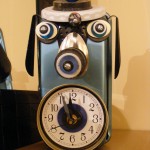
However, I was given a clock as a gift once. This wasn’t just any clock. It is a San Francisco art fair clock made out of – you guessed it – found objects. Junk. I think he is supposed to look like a dog with a hat on – what do you make of him? The body is an old baking tray, the clock framed by a mason jar lid, the nose is a handle from something, and the rest is just scrap pieces and random bits. I like to think that because he serves a purpose by telling me the time, he is an exception. He is just neat, isn’t he? He is literally a bunch of junk that I will treasure forever.

It just amazes me what people can create out of what most people would consider garbage!

A Farm Auction Masterpiece

Last weekend my Dad saw an ad in the local paper advertising a farm auction, north of Sterling, near Belleville, Ontario. Not entirely sure what a “farm auction” was, he was convinced to check it out with the hope that there might be some nice furniture being auctioned off. Tables and chairs were featured in the ad itself, so maybe “we could find some stuff for the cottage” he figured.

He and my mom drove up to where the auction was being held. Cars were parked a half mile down the road from the farmhouse – a good sign that this was one happening auction! Lots of items were being sold – old tractors, farm equipment, barn-type furniture – unfortunately none of which my Dad was in the market for, exactly.

Creative Commons Image | WELS.net

He thought about calling it a day when the rusted bucket complete with random bits of metal thrown in went for twenty-five cents. “It was all old junk”, he told me, “literally nothing sold for more than five bucks”.

That was until the auctioneer pulled out three dusty, cob-webbed watercolours. The other men there, all apparently in uniform consisting of overalls and Wellington boots, started bidding – and bidding well over $5.  Clearly they knew there was something special about these paintings. Wanting to get in on the action, my Dad starting bidding too, but had to drop out once one bid put the first painting over $650. It sold for $1200. The other one went quickly too – for around $1000. Rightly sensing the bids reducing, my Dad put on his game face and is now the proud owner of the last farm auction watercolour.

While he couldn’t recall the name of the artist, the signature was followed by “RA”, for Royal Academy, as in Royal Academy of the Arts in London, England. Those farmers really knew their art!  I’ll be sure to update this post with a picture and (if I can read it) the artist’s name once I get to see the painting in person. I’ll be interested to do some more research on the painting once I find out more about it! I wonder how much it is really worth… if it is really something special…

That’s just it about auctions – just like garage sales, thrift stores, and even our sites – you just never know what gems you are going to find!

Questions and Curios

A comparison between thrift stores and museums was made to me recently. Despite my best efforts to avoid the topic of museums and museum studies completely in my thesis for school (because holy….), it managed to sneak its way in and needless to say I have been talking a lot and thinking a lot about museums lately.

After this comparison was made I thought “yes… you’re on to something”. After thinking about it some more I realized that museums and thrift stores are absolutely nothing alike.

Museums are for displaying important objects, every item is separated and has fancy lighting and a label and a history that is culturally significant. People spend their whole lives studying these objects; people make careers out of setting up exhibitions. And other people pay good money just to go and look.

Thrift stores crowd their items together. You can’t just look you have to find. These objects are not priceless, but a cheap price. They don’t even compare in their social and historical value. It’s just a warehouse of other people’s throwaways and donations under fluorescent light.

Or are they?

Where do museum collections come from? Where did they start? Cabinets of curios? Personal collections? When one goes back in time the two begin to look strangely similar. Fundamentally, both museums and thrift stores display objects that have a history and (a) previous owner(s). But what makes the objects in the museum more valuable than those sitting on a musty shelf at Value Village?

Well, really, lots of things, but we won’t get into that. Instead, consider this – if you took Andrea’s Pinocchio and put it in a glass case with a label and its own little light, would it suddenly seem more valuable? Somehow more important? Perhaps even… museum worthy?

I’ve come to this conclusion: objects themselves have no real value. The only value that they have is attributed to them by you, by me, by the social and economic norms that shape our opinions and sense of worth.

What do you think? Are museums and thrift stores really all that different?

Creative Commons Image | Curious Expeditions

A Long Lost Childhood Book

I used to have this book when I was a child. I have fond memories of my sister and I sitting quietly on our Dad’s lap as he read it aloud to us – probably the only moments of solace for him as we spent most of our time screaming through the neighbourhood. The three of us can all recite it perfectly from memory today, even know it has been missing for years.

            I went to the animal fair,

            The birds and the beasts were there,

            The big baboon by the light of the moon

            Was combing his auburn hair…

Remember that one? I still can’t come to terms with the fact that it is essentially the story of the death of a monkey, and possibly a pre-mature warning on the dangers of alcohol. But this book was amazing. I was obsessed with the illustrations. I can still picture them in my head; they were so intricate and pastel and comforting.

Photo by Katie Bresner | 2009

I found the book once, after I wrote it off as long gone many years earlier. I hid it under a pillow in a drawer for safe keeping, knowing I was the only organized person in my family and if I left it out in the open it would be lost again forever! Perhaps not surprisingly, given the common occurrence of theft-by-sibling in my house, one day the book disappeared from the hiding spot… never to be seen again.

Given the magic and majesty of the internet, it dawned on me recently that I could probably find it online. I couldn’t believe I hadn’t thought of this sooner! I scoured our UsedCanada.com sites and even looked for it new – but I couldn’t find it. Every time I go into a thrift store, used bookstore, or new bookstore, for that matter, I look for it. I just can’t seem to find it anywhere.

The poem is called “The Animal Fair”, but I don’t know what the book itself was called or who did the illustrations. All of the current publications of it are all wrong – they have made it more politically correct, completely omitting the fact that the monkey was a raging alcoholic and this was his ultimate undoing.

It’s funny how some things from your childhood just stand out – the book probably means more to me now than it did then. Do you have any long-lost things from your childhood that you wish you still had?

Craft-Time! Make Your Own Personalized Stamp

Well hello boys and girls! Get out your linocut tools and I want to see good posture at those craft stations! Today we’re going to make our own stamps.

I actually learned how to do this in Grade 7 art class. Maybe it was Grade 8. What is the grade where the teachers think you’re responsible enough to handle sharp objects? It literally scarred me as a child, which is why I wouldn’t recommend this project for the kiddies, and sternly tell you TO BE CAREFUL! But anyway, it can be used for so many different things so I just had to share!

You can make any design you please and use your stamp for whatever purpose, such as fancying-up your snail mail, making personalized stationary, or even to make a variety of them for the kids to use to make their own art projects.

Here’s what you need:

  • - Lino. It kind of feels like an eraser and can be found at any arts or crafts store. There is a thicker, more rigid lino block, but I suggest the “speedy cut” variety. It’s much easier to work with and a slip of the linocutter is less likely.
  • - Lino Cutter
  • - Inkpad, or liquid ink and a paintbrush
  • - Pencil/pen

Step One: Get out your lino.


Mine is a scrap piece, which is why it is shaped like it is. Normally they are square or rectangular.

Step Two: Draw your design onto the lino in pen or pencil.


If you are making a design involving text like mine, make sure the text is backwards (so that it will print forwards). You can freehand this or use whatever technique you want to trace an image. Tracing an image in pencil, place the traced-side down on the lino, then scribble all over the back to transfer the lead to the lino will work well!

Step Three: Get out your linocutter


Step Four: Carefully carve out your design.


Make sure you plan ahead which areas will be in relief and which areas will be lowered.

Step Five: Carve out the areas around your image so that they will not be printed. If you are using an inkpad, it is probably easier to just cut away all of the excess around your image.


Step Six: Paint your ink onto your image. Or stamp your image into your ink pad.


I used this liquid ink.


Step Seven: Stamp!