Google+ Lisa Higgs | UsedEverywhere

UsedEverywhere Blog

Posts from Lisa Higgs

Why go green? Saving the planet is great and all, but I'm in it for the money.

Something Old, Something Borrowed, Something Green: How to Plan a Beautiful Eco-Friendly Wedding

The average cost of a Canadian wedding today is $24,000. $24,000! No wonder so many fathers are angry when their daughters announce they’re getting married. Even though most couples actually pay for their own weddings these days, that is still a huge bill to begin a new marriage with. But if you don’t want to start your honeymoon in debt, what are the options? Well, since this is the UsedEverywhere blog, of course you can throw a beautiful, eco-friendly wedding for a fraction of the usual cost!

My fiance and I had a tiny wedding budget thanks to two years of ongoing renovations on our fixer-upper. Over a year and a half of wedding planning, we found out that when you go green, you save green, even in weddings. We learned where to save big money and where to go green … and that the two usually went hand-in-hand. Elegant does not have to mean expensive, and neither does eco-friendly. We planned a gorgeous, “green” wedding for all our family and friends, and saving the planet was just a bonus.

In planning the wedding, Rolf and I turned to the same resources as we had been using in our ongoing renovations: the knowledge and help of our friends and family; online classified websites such as UsedOttawa.com for cheap and free materials; and Google. For 1/8th the cost of a standard wedding, $3,000, we got married last summer in a sweet, vintage wedding with one hundred of our closest friends. And partied our asses off.

In upcoming posts in this blog series on throwing a low-budget but beautiful wedding, I’ll go over all the aspects of planning a wedding, showing you where we saved money, what the green options are, and what not to DIY! Over the coming weeks I’ll cover all the wedding planning essentials:

The venue.The venue

The invitations.The invitations

The rings.The rings

The flowers.Wedding flowers

Photography.Photography and services

The dress! And other wedding clothes.Wedding clothes

The food.The food

Centrepieces and wedding favours.Centrepieces and wedding favours

Wedding cakes and cake toppers.edding cakes and cake toppers

If you’re out west this weekend, UsedVancouver.com is proudly sponsoring The Original Bridal SwapBridal Swap connects past brides and brides-to-be in a fun atmosphere so they can buy and sell gently used wedding items.

Keep Celebrating with Easter Leftovers

It’s Easter weekend, one of my favourite holidays because it usually brings with it beautiful spring weather, not to mention family togetherness. And chocolate. And turkey. All wrapped up in a long weekend.

Another of the innumerable pleasures of Easter weekend is … leftovers! Not last year’s eggs that never got found, but the leftovers from turkey dinner (sorry, ham people, I’ve got nothing for you). After Easter dinner is over, I love how the holiday continues to the delightful ding of the microwave as miniature versions of Easter dinner arrive steaming and ready. And don’t even get me started on how delightfully light on the palate a turkey sandwich with mayo, tomato, and lettuce is.

Once you’re down to the turkey bones, Easter surely seems over unless you’ve got a few chocolate eggs stashed away. You’re ready to toss the carcass in the compost bin or (god forbid) the garbage. But wait! There’s still plenty of turkey meat on those bones, and Easter doesn’t have to be over yet. The easiest and tastiest way to use up the last of the turkey is to make a soup or stew from the carcass. If you can boil a pot of water, you can make a turkey stew and keep celebrating Easter well into next week. Here’s how you get started:

Turkey Stew (or Soup)

Step 1

Put the carcass into a large pot, breaking it up if necessary. Fill the pot with enough water to cover about half the carcass or more, depending on how much water you want in your stew or soup. Bring to a boil, then cover and simmer for about 3 hours. You are done this step when you can easily separate the meat from the bones just by picking it up, like in this video:

Step 2

Remove the bones, leaving the meat and the broth in the pot. Depending how much meat was left on your turkey bones and how much water you added, you may have a turkey soup going on, or a turkey stew so meaty you can stand your spoon up in it.

Step 3

At this point you have a nice, meaty turkey broth and you can take this recipe anywhere you want by adding cut up veggies like onions, carrots, celery, diced potatoes, a chopped up sweet potato, some cubed turnip. Add flavour with spices or seasoning such as a chicken bouillon cube and/or salt, pepper, poultry seasoning, thyme, sage, marjoram, garlic.

This year I think I’m going to take my meaty turkey broth and make this Turkey & Wild Rice Soup recipe by adding chicken bouillon, wild rice, onion, celery, carrots, spinach, sage, and balsamic vinegar.

Step 4

Cook at a low boil for 30-60 minutes until the veggies are cooked to the desired tenderness. Done! Easter is the best!

What are you doing with your Easter leftovers?

Turkey Soup

Homemade Laundry Detergent

Fellow UsedEverywhere blogger Amber recently shared some of her top tips for cleaning your home without toxic chemicals. The natural cleaning methods she recommends are not only healthier for you and your family because they don’t contain toxic chemicals, but also better for the environment for the same reason.

As it turns out, homemade cleaning products are much cheaper, too. When you buy cleaning products from the store, you’re paying for the dozens of chemicals that go into every bottle, plus the research that went into developing those chemicals. Add in the cost of the fancy packaging, and the marketing campaigns and advertisements that get you to buy the cleaners in the first place. Chemicals are expensive!

True confession time: I don’t do that much housecleaning, so switching to homemade cleaning products isn’t actually going to save me much money. But my husband and I generate a lot of laundry somehow, so using store-bought laundry detergent is one area of our lives where we were literally pouring money down the drain, along with a lot of chemicals. That is why we switched to homemade laundry detergent three years ago and have never gone back.

Homemade laundry detergent is quick and easy to make – it takes only three ingredients compared to the three dozen listed on the back of a box of Tide. It is low-sudsing, so it is perfectly safe to use in both HE front-loaders and standard washing machines. Homemade laundry detergent performs just as well as any store-bought detergent ever did for me: it works in both cold and hot water, it lifts stains, keeps whites white, and takes Rolf’s shirts from funktastic to fresh as a daisy. All without dozens of toxic chemicals, and for pennies a load. With all these points in favour of homemade laundry detergent, I feel like a chump for ever using store-bought detergent!

If you’re ready to shake off the chains of the store-bought laundry detergent industry, here’s how you do it.
Homemade Laundry Detergent Ingredients

Homemade Laundry Detergent – Powder

You can find the ingredients in the laundry or cleaning aisle of most Wal-Marts and large grocery stores such as Loblaws / Real Canadian Superstore.

Ingredients:

  • 1 cup borax
  • 1 cup washing soda (not to be confused with baking soda!)
  • 1 bar laundry soap (e.g. Sunlight, Fels Naptha, Zote, or you can even use regular body soap like Ivory)

Directions:

Finely grate the bar of laundry soap with a cheese grater, blender, or food processor. Mix the grated soap with the borax and the washing soda. Store in an airtight container such as a jar or plastic tub. This detergent is very concentrated, so you only need to use 1 tbsp of powdered detergent per load of laundry (use 2-3 tbsps for heavily soiled or stinky loads).

Homemade Laundry Detergent – Liquid

The liquid version of homemade laundry detergent takes more work, but it still requires only three ingredients and is just as cheap. I made the liquid version for two years because I had always used liquid store-bought detergents, and because my HE front-loading washing machine had a liquid dispenser. Turns out you can just remove the liquid-dispensing cup from the washing machine and use powder instead. The powder works just as well as the liquid for me, so I’ve switched because it’s easier to make. If you just plain prefer liquid detergents, here’s how you make the homemade version.

Ingredients:

  • 1 cup borax
  • 1 cup washing soda
  • 1 bar laundry soap
  • large bucket with lid

Directions:

Grate the bar of laundry soap into a large pot. Add 6 cups of water and heat on low or medium, stirring occasionally, until all the soap is melted – avoid boiling as this produces a lot of foam. In a large bucket, mix the borax and the washing soda with 10 Litres (or 40 cups or 2.5 gallons) of very hot water and stir well. Add the hot soapy water from the stove and stir until everything is thoroughly mixed. Let stand overnight. When it cools, it will turn into a solid gelatinous mass – break it up and stir it with a large wooden spoon until it becomes a smooth, thick, liquidy mixture. Use 1 cup per load.

COST ANALYSIS

Each of the recipes above makes enough for 50 loads of laundry. The cost breakdown is:

Borax (2kg box / 10 cups): $4.99 ÷ 10 cups = $0.50 per batch
Washing Soda (3kg box / 15 cups): $4.99 ÷ 15 cups = $0.33 per batch
Sunlight Laundry Bar Soap: $1.25 each

At a total cost of $2.08 per batch, which makes enough for 50 loads of laundry, that’s about four cents a load. See you in the borax aisle!
Homemade Laundry Powder

Cleaning Out The Closet: 5 Tips For Making Room For New Clothes!

A little while ago I shared the goodies that I bought at Value Village on their most recent 50% off day. What I didn’t share was that these finds have been sitting in a pile on top of my dresser since that day because I didn’t have any room in my closet for more clothes. It was definitely time for a little “out with the old and in with the gently used” – in other words, cleaning out my closet.

Luckily, I find cleaning out my closet just as fun as shopping for more clothes! Is that weird? Purging items I don’t need anymore is a no-brainer way to calm clutter and it actually helps me feel more in control of my life. Every item I remove from my closet and my house is one less thing I have to keep track of, one less thing to organize and clean, one less thing filling up my home and my mind. And … it makes room for more clothes!

Clean Out Your Closet


Here are the tips that I follow whenever my closet and dresser drawers start bulging:

1. Go through your entire wardrobe: check every single hanger in your closet and every pair of socks in your dresser drawers. Pull out every item of clothing that you know you don’t want and put it right away into a “discard” pile.

2. Step two is where we start separating the purgers from the proto-hoarders. Go through your wardrobe again, and pull out everything that you’re not 100% sure about keeping. Put these in a “maybe” pile. Don’t worry, you won’t have to get rid of anything you don’t want to! Just trust the system for now and put that great dress you bought on sale three years ago into the “maybe” pile.

3. Now go through your closet and drawers one last time, and pull out everything you think is a great piece of clothing and fully plan to wear again one day, but that you haven’t worn in a long time (you can define “long time” however you like, but I like to go with “haven’t worn it since the last time I cleaned out my closet”). Put these clothes in the “maybe” pile, too.

4. Now try everything on! Don’t skip anything – make yourself try it on and check it out in a mirror. As you try things on, you might find that you change your mind about a lot of your “maybe”s and put them into the discard pile. It’s funny how clothing has a way of not looking as good as we remembered, and it suddenly becomes an easy decision to purge it. If you’re still unsure about something even after trying it on, put it back in the “maybe” pile.

5. When you’re done trying everything on, put everything that’s still in the “maybe” pile back in your closet or dresser. If it goes on a hanger, a cool trick is to hang the hanger backwards on the closet bar until you next wear that piece of clothing, at which time you put the hanger back normally again. Six months or a year from now, or whenever you next clean out your closet, you’ll know that everything on a backwards hanger has been sitting there untouched since the last time you cleaned out your closet. It might make it easier to discard next time.

Hang your hangers backwards


What to do with your discard pile? There are plenty of options! Pass them along to someone who has similar taste in clothing. Drop them in any of the streetside donation bins you find in most cities. Take them to a thrift store: Value Village, Salvation Army, Goodwill, St. Vincent de Paul – every thrift store takes donations of gently used clothing. Or my favourite method because it’s so darn easy: contact the Canadian Diabetes Clothesline online and schedule a FREE pickup of your unwanted clothing and other household items. The Canadian Diabetes Association sells the goods it picks up to Value Village and uses the money for diabetes research and education. Everybody wins!


Thrift Stores … Not Just Your Granddad's Clothes Anymore

I’ve had this song in my head for awhile, and it was giving me the urge to go thrift store shopping.

So on one of Value Village’s sale days at the end of February, my husband and I had a date night of sorts at the thrift store. It was surprisingly fun to score some great deals on nice clothes together. And the changerooms are big enough for two …

Rolf had actually never been thrift store shopping before, but I love thrift stores. I get it from my mom. You can point her to a Salvation Army or a Goodwill and she will come out with an armload of fabulous outfits. I usually prefer Value Village myself. Their prices are higher, but they have lots of 50% off days, and it’s hard to beat the size and selection of a big, bright Value Village.

On this trip Rolf wanted to see if he could find shirts and sweaters for work. I, as usual, wanted to look at everything, but I decided to make a short list and focus my efforts on skirts, jeans, hoodies, and long-sleeved shirts. And some drinking glasses. And serving dishes.

By the way, for the nicest stuff, go to a thrift store in an upper-class neighbourhood … the clothing at the new Stittsville Value Village in Ottawa is full of name brands that I can’t even afford to buy new, thanks to getting their donations from the rich surrounding Kanata and Stittsville neighbourhoods!

How did we do? Check out the awesome buys we got!

 
Thrift Store Finds!  White serving dishes and tall drinking glasses

Found the serving dishes and four tall drinking glasses! The dishes came with a great wooden tray, too. My sister-in-law has beautiful white serving dishes from Pampered Chef that I’ve been coveting (and borrowing), and I’ve been looking for something similar the last three or four times I’ve been in a thrift store. When I saw these on the shelf I pretty much got a thrift store boner.

Drinking glasses are 4 for $2.99 at Value Village, and I’ve decided to become a mixed glasses person. It has taken me years to get over my clenched fist desire to have sets! matching sets of glasses! all uniform! fitting perfectly in the cupboard in shiny rows! But you know what? Now I never have to worry about a glass breaking and ruining a set. Any time I need more glasses, I just go to the thrift store and pick up four more. And I’m developing a set in a way, a set of unique glassware.


Thrift Store Finds! Great men's sweaters and shirts for work

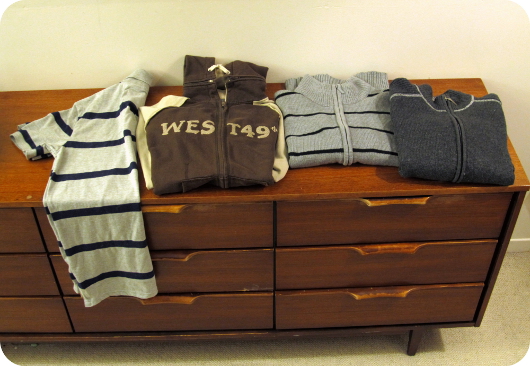
Rolf found two great zip-up sweaters for work. He also got a collared t-shirt for work, it’s from Bluenotes and it still had the store tags on it. Brand new shirt score! The cool two-tone brown hoodie is for hanging out at home.


Thrift Store Finds: Women's skirts and sweaters

As you can see I didn’t do so well on jeans and hoodies. I never have much luck finding hoodies at thrift stores for some reason. And I would have spent more time looking for jeans at Value Village if they hadn’t started hanging their pants sideways. I find that actually makes it harder to check the sizes, not easier as promised. Frustrating! But, I got four skirts to wear with tights and got two sweaters, too. The green sweater is from Jacob and was $4. The Mickey Mouse sweater is flattering and sequined and AWESOME.


I can’t wait for the next 50% off sale at Value Village … it will be time to get summer stuff!


Eat Local, Eat Healthy, Eat Cheap – with the Ottawa Good Food Box!

Some time ago, I emailed my city councillor my thoughts about allowing hens to be kept on residential properties (totally for, of course!). He and his staff were gracious and gave me a lot of insight into the process of getting city by-laws changed. Fast-forward to today and hens still aren’t allowed in Ottawa, but I did end up on my councillor’s newsletter distribution list. Once a month I get an email about upcoming activities, events, and other notable things in my ward and the rest of the city … and that’s how I found out about the Ottawa Good Food Box program.

The Ottawa Good Food Box is a non-profit initiative that offers healthy food to communities at wholesale prices. Through the Ottawa Good Food Box, you can order a box full of fruits and vegetables once a month. There are different sizes of boxes to buy, and it should really be called the Good Food Great Price Box, because the biggest box for feeding a family costs only $20!

They also offer a medium box for $15, a small box for $10, or a fruit bag for $5. Each month there is a variety of delicious and nutritious fruits and veggies in the box, and the goal of the program is to offer food that is in season and grown as close to home as possible. There is even an organic box offered during growing season.

Once a month customers place their orders on the Ottawa Good Food Box website or directly with the coordinator of the nearest distribution site. Customers choose the box size and price that meet their needs and the boxes are delivered to neighbourhood distribution sites for pickup. There are 30 distribution sites, so chances are there is one near you. (They will also open a new distribution site anywhere there are 10 customers and a site volunteer.) A newsletter with nutrition tips, recipes for cooking any of the less-common veggies in the box that month, and information about the program, is included in every order.
Ottawa Good Food Box

I ordered my first Good Food Box through the website for February, and picked it up last week. Even though the $20 size is described as “good for a whole family”, my husband and I decided that we probably eat this many fruits and veggies already … and if not, we should be! Since it costs an extra $1.50 to order from the website instead of in person, I paid my $20 for March when I went in to pick up my first box. Here’s hoping we eat our veggies and not our words.

This is what was in our $20 Ottawa Good Food Box for February 2013:

10 lb bag of potatoes (potatoes are only provided every second month)
2 lb bag of onions
2 lb bag of carrots
3 enormous beets
1 acorn squash (weighing in at 2.5 lbs!)
5 apples
4 oranges
8 bananas
1 grapefruit
2 kiwis
1 cauliflower
1 huge head of romaine lettuce
1 green bell pepper
1 tomato

In the interest of research, I actually weighed everything that was in the box and then compared the prices at my neighbourhood Sobey’s and at the discount grocery store Food Basics. At Sobey’s, February’s $20 Good Food Box would have cost me over $35. At Food Basics, it would have cost me $25 – so I saved $5 there and a few trips to the store since I don’t usually buy that much at once. I also got more local food than I would have at the grocery store because, to be honest, I never remember to consider that while I’m shopping.

$20 a month or less … for a huge box of fruits and veggies … and they buy local so you don’t have to think about it. The Ottawa Good Food Box has been around since 1996, why haven’t I heard about this before!?

Great Moments from the UsedOttawa Winter Scavenger Hunt!

On February 16th and 17th, UsedOttawa.com hosted the first annual Winter Scavenger Hunt and it was a great success! People came out from all over the Ottawa area to participate and enter to win one of 3 iPad minis. On Saturday and Sunday, hearty contestants braved the cold and came downtown to pick up their lists and tick off items such as taking a photo of themselves on Parliament Hill.

It was colder than an Antarctic ice hockey championship, but Ottawans didn’t let that stop them from enjoying the final weekend of Winterlude! Rosy cheeks, sunshine and exercise – what a perfect way to spend the weekend.

Congratulations to all the winners, and a big thank you to all the participants for making my first weekend working for UsedOttawa so much fun! Check out some of my favourite moments from the scavenger hunt:

I love how these guys are rocking the UsedOttawa t-shirt! Very cool photo.

A very dapper snowman.


This family actually found a snowman-building station downtown that was set up for Winterlude. I love Ottawa!


Technically the scavenger hunt clue DID say: “Take a picture of a snowman – or some semblance of one!”


This guy’s submissions were hilarious.


Take a picture of something on Sparks Street, too bad we couldn’t award points for awesomeness.


Products That Changed My Life: the Electric Blanket

Normally, I’m not a fan of taking a regular non-powered everyday object and “reinventing” it so that it now takes electricity and money to use. I think the world needs to be moving the exact opposite direction on that front. Digital picture frames, plug-in air fresheners, automatic paper towel dispensers and electric can openers (if you have arthritis I guess you get a pass on this one). Apparently I’m a total hypocrite though, because my husband bought me an electric blanket two Christmases ago… and I can’t get enough of it. I call it my electric husband.

Not that kind of electric husband. But almost as good.

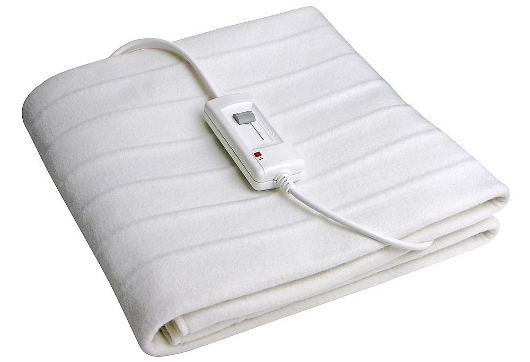
When I first opened my Sunbeam Electric Fleece Throw, I was a little disappointed and my face must have looked like someone had just given me a digital picture frame. That feeling actually persisted for a while, because although I loved to sit under the electric blanket on the couch watching a movie, it was a hassle to get the blanket out of the closet, unwind the cord, find an outlet, and set it up each time. As a result, I didn’t use it all that much the first winter.

But this winter, I learned to stop worrying and love the blanket. These days I put the electric blanket on my side of the bed in between the sheet and the top blanket and oh mama that’s nice. Going to sleep in the winter used to be an hour-long ordeal every night in which I pulled the blankets over my head and shivered in the fetal position until my meager body heat finally warmed up the space enough for me to fall asleep. The shrieks and kicking from my husband didn’t help matters any. Let me tell you, my electric husband never complains about my popsicle feet.

Turning on the electric blanket for five minutes a night is all it takes to warm up my side of the bed. If I’m feeling particularly indulgent, I turn it on before coming to bed so that it’s already warm when I get there. I’m getting almost an hour more sleep each night just by using a 180W electric blanket for five minutes. My real husband gets more sleep too, because it’s really hard to sneak your icy feet of death onto someone’s warm legs without waking them up.

Me using an electric blanket even allows us to save money on our home heating bill because we can turn the furnace way down at night and I’m warmer than ever. It also does double duty as a heating pad for sore muscles. Best Christmas gift ever, from someone who apparently knew me better than I knew myself. My electric blanket has changed my life (for six months of the year anyway).


And in the category of Products That Changed My Life – Personal Heating division, I’d like to give an honourable mention to: my housecoat. As soon as I get home I put a fluffy bathrobe on over my clothes and magically the incessant complaining about harsh Canadian winters and meager vacation budgets stops. We can keep the house at 18°C for maximum savings and I actually feel comfortable. I do try to keep up appearances by taking off the bathrobe when I answer the doorbell, but there ain’t nothing wrong with a cute housecoat when you’re wearing it over nice clothes with your hair done and makeup on. My husband in his bathrobe is a-okay with that.

 
Ryan Gosling Likes Your Bathrobe
 

A Gift From The Heart?

I know this is mostly a green and frugal living blog, but today I wanted to take the time to ask a serious question about donating blood. I suppose I could have somehow made this related to Valentine’s Day, let’s see … hearts … pumping blood … ok maybe not. If you think about it though, donating blood and living green share the same philosophies. I try to live greenly to support a clean, functioning planet that will be there for me in the future, and I also believe in supporting the blood donor system so that it will be there for me and my loved ones if we ever need it.

A Gift From The Heart

So the question is, if the worst happened and you or someone you know needed a life-saving blood transfusion … would you want there to be a supply of donated blood available to use?

Duh. Of course you would.

Now get yourself to the blood donor clinic or bloodmobile and donate some blood. If you want to use a system in the future you have to support it today. Blood donors are always needed.

I started giving blood two years ago, mostly because I wanted to find out my blood type, and I’ve kept it up because it turned out to be sort of awesome. A few times a year I literally give the life-saving power that is within my veins, and it pretty much makes me feel like a goddamn superhero. I lay back in a padded recliner and hang out with other superheroes while our nurses attend us, and then we go have a juice box and some cookies.

Okay, to be honest the cookies suck. It’s kind of misleading that they advertise delicious free cookies as an incentive to give blood when you get two Oreos in cellophane.

But because I donated today, in the future, if me or my loved ones should ever need blood, that system will be there for us. Maybe it’s selfish reasoning, but I believe in supporting a system that I want to benefit from. That I will be saving lots of other people’s lives with my donations is just a side benefit. Also, it turns out I can get behind any system that suggests you eat steak and red wine.

It sounds supremely selfish when I write it all out, but maybe it’s a philosophy that works. All I know is that supporting the blood donor system makes sense to me and it absolutely feels like the right thing to do. Besides participating in a system of insurance for yourself and your loved ones, other selfish reasons to give blood are:

  • Every time you donate you save up to three lives because there are three different products in your blood that can be used by others. You will be helping to save car crash victims, cancer patients, premature babies, and others. It feels pretty friggin’ good.
  • You get to find out your blood type, which is cool.
  • You get an hour off work.
  • It doesn’t hurt, not really. It hurts a little bit at the very start, and then it stops. If it hurts after that, tell them to adjust the needle.
  • The government can’t discover you have superpowered blood and ask you to assume the role of world hero if you don’t donate.
  • You can meet cool people. You will be seated near lots of other people who all have something in common with you. If you go to a bloodmobile parked outside an office building you will meet the people who work there. Just saying.
  • It’s easy to do. You can book an appointment online at www.blood.ca with the closest clinic or bloodmobile. You can also book by calling 1-888-2 DONATE.

Give from the heart!

National Sweater Day Is Actually A Thing

This coming Thursday February 7th is National Sweater Day – the one day in winter you turn down the heat and put a sweater on to go easy on the environment and our country’s natural resources. Er, what?

It snows here more than half the year. We have the world’s largest skating rink. We pop out hockey players by the baker’s dozen. We invented the snowmobile. If you’re wearing t-shirts during the winter, you should have to hand in your Canadian passport.

We live in a wintery climate – Canada the Cold is a worldwide cliché. Every Canadian knows by now that setting your thermostat back when you’re away at work and while you’re sleeping saves money, not to mention uses up fewer of our country’s natural resources and creates less air pollution. Duh. Who wants to pay to heat their house when they’re not even there anyway? True Canadians turn down their thermostats every day, not just on February 7th (exceptions granted for those with underpowered furnaces compared to their house size).

If you want to join the ranks of the winter-hardy, check out this slideshow of tips on how to trim the fat on your heating bill. If you want to wear shorts and t-shirts in the winter, have you heard of National Sweater Day?

Turn Your Thermostat Down By One Degree

The laws of thermodynamics say that the warmer a house is compared to the outdoors, the faster it loses heat. So the warmer you keep your house when it's cold outside, the more you're paying for each degree. Turn your thermostat down permanently by one degree - you probably won't even feel it.

Turn Your Thermostat Down While You're Away

Every degree you turn down your thermostat in an 8-hour period, you save one percent or more off your energy bill. The eight hours you're away at work is free money so rack up big savings by cranking down the thermostat five degrees when nobody's home. Do the same for the eight hours a day you're sleeping and aren't conscious of what temperature it is, and you'll save at least 10% without anyone feeling a difference.

Use A Programmable Thermostat

Nobody likes waking up to a cold house, or having to remember to turn down the thermostat before going to work, so invest in a programmable thermostat and stop thinking about it at all. You'll come home to a warm house even after saving money all day. Just remember to program the damn thing: 50% of programmable thermostat owners don't use the automatic features, making you wonder why they ever upgraded from the dial on the wall.

Seal the Air Leaks For Big Energy Savings

The biggest way to save on heating (and cooling) energy use doesn't actually involve turning down your thermostat at all. You can keep your thermostat where it is but still save on your energy bill by sealing the leaks in your house where cold air is getting in and warm air is getting out, such as around windows and doors. Older homes can save up to 40% off their energy bill without ever touching their thermostats, and even newer homes can have air leaks.

Close the Vents You Don't Use

Only heat the parts of your house that you actually use. Close the heating vents in unused rooms and keep those doors shut all winter. You'll be putting an entire extra room between you and the cold outside if you do this.

Get Nest the Creepy, Sexy, Self-Programming Thermostat

Get the creepiest thermostat ever. Nest, the Learning Thermostat, programs itself. It figures out your schedule on its own and even knows when you leave the house unexpectedly for an errand and when you return (and turns the furnace off and on accordingly). It can even be controlled from your smartphone. It's also one super sexy thermostat, designed by the same genius behind the iPod.

Use an Electric Blanket to Heat Your Bed

Forget cuddling, get an electric blanket. An electric blanket on your bed turns a cold bed into a tropical oasis in five minutes, which beats your partner's cold feet on your warm legs any day. By heating your bed for five minutes instead of heating your entire house for an hour just to warm your bedroom, the energy savings are obvious.

Put Your Ceiling Fan in Winter Mode

Did you know that ceiling fans have both a summer mode and a winter mode? In summer, the ceiling fan should rotate counter-clockwise on high, pushing air down to create a cooling breeze for the occupants of the house. In winter, the ceiling fan should rotate clockwise on low to pull the cold air at the floor up to the ceiling and get the warm air that's trapped there circulating to the living area.

Wear Socks to Keep Warm

Slippers or extra socks are a big help in feeling warm since they put a barrier between your body and the cold floor. By the same logic, laying a carpet on a hard floor increases warmth - and absorbs noise!

Wear a Bathrobe to Keep Warm

Put on a big fluffy bathrobe over your clothes as soon as you get home and you'll instantly feel warm at lower temperatures. If you think a Snuggie is somehow different than a bathrobe, get a Snuggie. I love wearing my bathrobe all day and saying it's for environmentalism.

Wear a Hat to Keep Warm - Or Don't

Hats really keep you warm, but who wants hat hair?

Wear a Sweater to Keep Warm

Wear a freaking sweater. Happy National Sweater Day!